

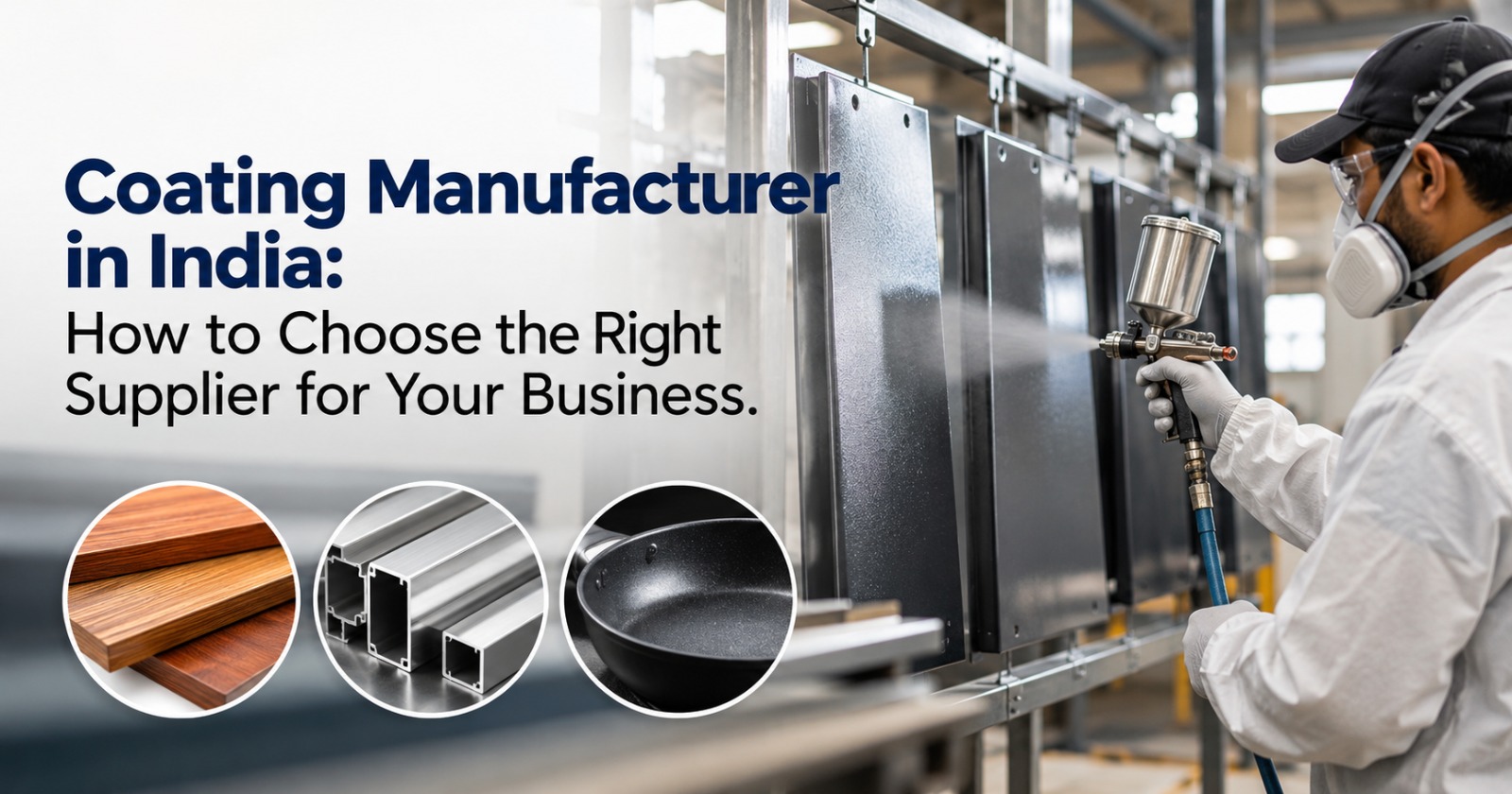
Choosing the right coating supplier is important for businesses that manufacture industrial components, furniture, consumer products, cookware, and other finished goods. The right coating can help achieve the desired appearance, surface protection, and product performance. However, every application has different requirements, so selecting a suitable coating requires careful consideration.
When comparing suppliers, businesses should look beyond price. Product quality, technical support, application requirements, consistent supply, and product compatibility are also important factors. A suitable supplier should help buyers understand their options and choose products according to their manufacturing needs.
This guide explains how to evaluate suppliers, understand different coating types, and make an informed purchasing decision.
Why Choosing the Right Coating Supplier Matters
Coatings are used for different purposes, including improving surface appearance, providing specific surface properties, and achieving the required finish on manufactured products.
Choosing the right supplier can help businesses identify suitable products and understand how those products should be applied. It can also help reduce avoidable production issues caused by incorrect product selection or unsuitable application conditions.
Before choosing a supplier, consider the following factors:
-
Product compatibility: The coating should be suitable for the material being coated.
-
Finish and appearance: Colour, gloss, transparency, and texture should match the product requirements.
-
Application process: The coating should work with the available application equipment and production process.
-
Quality consistency: Consistent product characteristics help maintain production standards.
-
Technical support: Clear instructions can help businesses understand application and curing requirements.
-
Supply reliability: Delivery schedules and product availability should meet manufacturing needs.
A supplier that understands these factors can help buyers make better decisions and avoid selecting a product based on price alone.
How to Select a Reliable Coating Manufacturer in India for Industrial Applications
Finding a suitable supplier starts with understanding your business requirements. A coating manufacturer in india should be evaluated according to its product range, technical information, quality-control practices, and ability to support the intended application.
Here are five important points to consider.
1. Check the Product Range
Review the supplier's available coating products and identify whether they are relevant to your industry. Different products may require different coating technologies, finishes, and application methods.
2. Review Technical Documentation
Ask for the relevant Technical Data Sheet (TDS) and Safety Data Sheet (SDS). These documents help buyers understand product specifications, application instructions, drying or curing conditions, storage requirements, and safety precautions.
3. Understand Quality-Control Practices
Ask how product quality and batch consistency are monitored. For applications with specific performance requirements, discuss sample testing and agree on suitable acceptance criteria before beginning regular production.
4. Ask About Technical Support
Application problems can occur when a coating is incompatible with the substrate or applied under unsuitable conditions. Confirm whether the supplier can provide product guidance and help clarify technical requirements.
5. Compare Supply and Commercial Terms
Review minimum order quantities, pricing, lead times, packaging, and delivery arrangements. These factors affect purchasing decisions and help businesses plan their production schedules.
Understand Your Product and Coating Requirements
Before contacting a supplier, prepare clear information about the product you need to coat. This helps the supplier understand your application and recommend suitable options for further evaluation.
Identify the Surface Material
The substrate may be metal, wood, plastic, ceramic, or another material. Each surface can have different preparation and adhesion requirements. Share the material type and any existing surface treatment with the supplier.
Define the Required Finish
Explain whether you need a glossy, matte, transparent, coloured, or textured finish. Providing a sample or reference specification can help communicate your expectations clearly.
Consider the Working Environment
Think about where and how the finished product will be used. Indoor and outdoor products may have different requirements. Exposure to moisture, sunlight, cleaning agents, chemicals, or temperature changes should be discussed when relevant.
Review Application and Curing Conditions
The application method, equipment, film thickness, drying time, and curing process can affect the final result. Confirm that the selected product is compatible with your production setup.
Establish Quality Requirements
Determine which characteristics are important for your product. Depending on the application, these may include adhesion, hardness, abrasion resistance, chemical resistance, or appearance. Use appropriate testing methods to verify performance rather than relying on general claims.
Types of Industrial and Specialty Coatings
Different coating technologies offer different properties and uses. Understanding the main categories can help buyers ask the right questions and identify products that may suit their applications.
Polyurethane (PU) Coatings
Polyurethane coatings are used in applications where the required finish and surface properties depend on the product formulation. Buyers should consider the substrate, appearance, application method, and intended use before selecting a suitable product.
When evaluating pu coating paint, check the available finish options, application instructions, curing conditions, and compatibility with the surface material. Always review the product's technical documentation before use.
Epoxy Coatings
Epoxy coatings are used in various industrial applications. Their suitability depends on the formulation, substrate, operating environment, and required performance. Buyers should confirm the product specifications and application conditions with the supplier.
UV-Curable Coatings
UV-curable coatings are designed to cure when exposed to suitable ultraviolet light. They may be considered for production processes where the coating formulation and curing equipment are compatible with manufacturing requirements.
Water-Based Coatings
Water-based coatings use water as a major component of the coating system. Buyers should review drying conditions, surface preparation, application requirements, and the suitability of the product for the intended use.
Silicone and Other Specialty Coatings
Silicone and other specialty coatings serve specific application requirements. Their suitability depends on the product formulation and the conditions under which the finished item will be used.
The best coating choice depends on the actual application rather than the coating category alone. Buyers should review technical information and conduct suitable testing before finalizing a product.
What to Check Before Finalizing a Coating Supplier
A supplier should be evaluated on both technical and commercial factors. This makes it easier to compare available options and understand whether a product can meet your manufacturing requirements.
Use this checklist when comparing suppliers:
|
Factor |
What to evaluate |
|---|---|
|
Product suitability |
Compatibility with the substrate and intended application |
|
Documentation |
Technical specifications and safety instructions |
|
Quality control |
Consistency and relevant inspection procedures |
|
Sample testing |
Availability of samples and application trials |
|
Customisation |
Available colours, finishes, and product options |
|
Supply reliability |
Lead times, packaging, and order quantities |
|
Technical assistance |
Product guidance and troubleshooting support |
|
Commercial terms |
Pricing, delivery costs, and payment conditions |
A coating manufacturer in India should be assessed using clear product requirements and relevant documentation. Ask suppliers to explain the intended use of their products and identify any limitations that may affect your application.
Do not compare suppliers on price alone. Consider the total cost, including preparation, application, curing, testing, and any additional process requirements. A sample trial can help identify potential problems before a product is introduced into regular production.
Understanding PU Coatings and Their Applications
Polyurethane coatings are available in different formulations for different finishing requirements. Their properties can vary, so buyers should confirm the exact product specifications before selecting a coating for industrial use.
When considering PU coating paint, evaluate these points:
-
Surface compatibility: Confirm that the product is suitable for the substrate.
-
Appearance: Check the required color, gloss, transparency, or texture.
-
Application method: Follow the manufacturer's recommendations for application equipment and preparation.
-
Curing requirements: Review the recommended drying or curing conditions.
-
Performance testing: Identify the relevant tests for the intended application.
-
Safety and handling: Follow the supplied safety documentation and product instructions.
For businesses comparing PU coating manufacturers in India, the decision should involve product suitability, technical documentation, supply arrangements, and support—not just the advertised product range.
Ask whether a sample can be tested on the actual substrate and whether the supplier can provide guidance on application conditions. These steps help buyers make decisions based on their own requirements.
Questions Buyers Should Ask Before Placing an Order
Before making a purchase, clarify the technical and commercial details with the supplier.
Is the coating suitable for my product?
Share the substrate, surface preparation method, and intended use. Ask the supplier to confirm suitability and explain whether preliminary testing is recommended.
Can I test a sample before bulk ordering?
Discuss sample availability and agree on how the coating will be evaluated. The test should reflect the intended application as closely as practical.
What technical documents are available?
Request the relevant technical and safety documents, along with application instructions and product specifications.
What are the minimum order quantity and delivery timeline?
Confirm the order quantity, expected lead time, packaging, storage requirements, and delivery arrangements before placing the order.
How is product consistency assessed?
Ask about the supplier's quality-control process and discuss how important product characteristics will be checked.
What support is available if an application problem occurs?
Clarify how to obtain technical guidance and what information the supplier will need to investigate an issue.
These questions help buyers understand what they are purchasing and set clear expectations before beginning production.
Why Technical Support and Customisation Matter
Technical support is important when a coating must work with a specific material or manufacturing process. A product that works well in one application may require different preparation or curing conditions in another.
For example, a manufacturer changing the substrate, application equipment, or production speed should review whether the existing coating remains suitable. Testing may be necessary before making changes to regular production.
Customisation may also be useful when a standard product does not meet specific colour, gloss, texture, or application requirements. Buyers should confirm which options are available, how long the process may take, and whether additional testing is needed.
When comparing PU Coatings Manufacturers in India, ask about technical assistance, product documentation, sample testing, and the ability to address your specific requirements.
Exploring Industrial Coating Solutions from SBL Coatings
SBL Coatings offers industrial and specialty coating solutions for businesses looking for suitable products for their manufacturing and finishing requirements.
Visit the official website at SBL Coatings to explore the available product information and identify relevant coating categories.
Before contacting a supplier, prepare details about your substrate, desired finish, application method, expected order quantity, and performance requirements. This information can help make the initial discussion more useful.
If you are evaluating a coating manufacturer in india, consider asking SBL Coatings about relevant products, technical documentation, application guidance, and supply requirements. Confirm product suitability and specific capabilities directly with the company before making a purchasing decision.
The goal is to identify a coating solution that fits your application, rather than choosing a product based only on a general description or marketing claim.
Final Checklist for Choosing a Coating Supplier
Before placing an order, review the following points:
A structured evaluation helps buyers compare suppliers fairly and identify potential issues before committing to regular production.
Frequently Asked Questions
1. How can I choose the right coating supplier?
Review the supplier's product range, technical documentation, quality-control practices, supply arrangements, and technical support. Where necessary, request a sample and evaluate it against your application requirements.
2. Which factors affect industrial coating selection?
The substrate, intended use, operating environment, desired appearance, application method, curing conditions, and required performance all influence coating selection.
3. What should I check before purchasing PU coatings?
When evaluating pu coating paint, check substrate compatibility, finish options, application instructions, curing requirements, safety documentation, and relevant performance test results.
4. How can I assess coating quality and consistency?
Review product specifications, discuss quality-control procedures with the supplier, and use appropriate inspection and testing methods. Agree on acceptance criteria before starting regular production.
5. What information should I provide when requesting a coating quotation?
Share the substrate type, intended application, desired finish, estimated order quantity, application method, performance requirements, and delivery location. This information helps the supplier assess your needs.
Conclusion
Choosing the right coating supplier requires more than comparing prices. Businesses should evaluate product suitability, technical documentation, quality consistency, application requirements, and supply reliability before making a decision.
For companies comparing PU Coatings Manufacturers in India, a clear understanding of the required finish, substrate, production process, and technical specifications can make supplier selection easier.
Explore SBL Coatings to learn more about its coating solutions and discuss your application requirements with the company.
